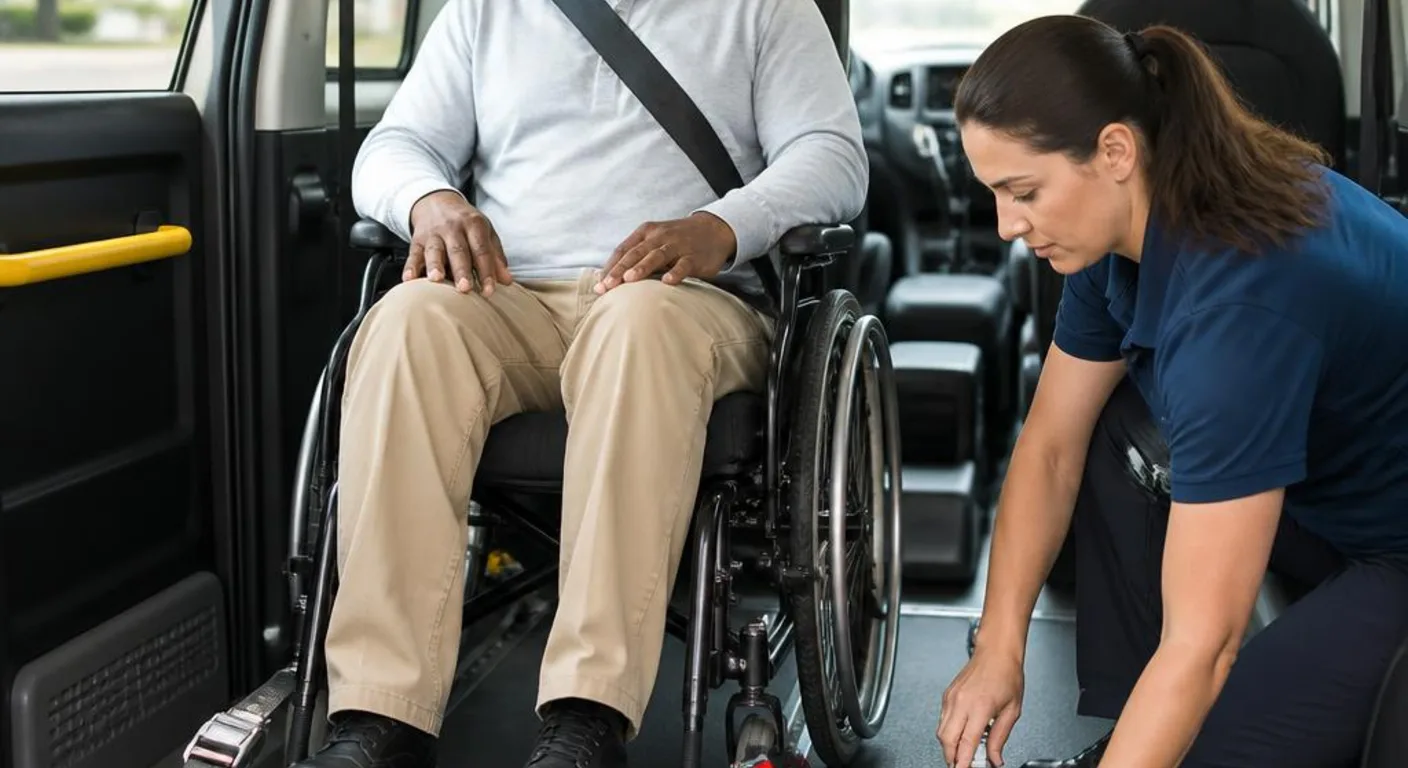
A wheelchair may be secured with its occupant in a compatible wheelchair-accessible vehicle, but it is not automatic for every chair or passenger. Share the wheelchair's type and dimensions, explain the passenger's position and ask the provider to confirm the securement and transfer plan.
What determines whether the passenger can remain in the chair?
- The chair's width, height, length and weight.
- Whether it is manual, powered, reclining or customized.
- The vehicle's lift or ramp, interior space and securement equipment.
- The passenger's posture, head support, footrests and ability to tolerate the ride.
- Any attached oxygen, medical equipment or positioning supports.
What information should you send before the quote?
A photo or clear description can help the provider understand the chair. Include measurements when available, especially for powered or customized chairs, and say whether the passenger will transfer during the ride.
What should you ask about securement?
- Where the wheelchair will be positioned in the vehicle.
- How the chair and passenger are secured.
- Whether the passenger needs a particular head, foot or lateral support.
- Whether the chair's brakes, batteries or accessories need special handling.
- What the provider wants ready at pickup.
When might a stretcher be a better fit?
A stretcher may be more appropriate when the passenger cannot safely remain seated, must travel lying flat or needs a level of positioning that a wheelchair vehicle cannot provide. Ask the provider to evaluate the actual mobility need rather than choosing by diagnosis alone.
How can you prevent a pickup-day mismatch?
- Send the wheelchair type and approximate dimensions when requesting the ride.
- State whether the passenger transfers or remains seated.
- Confirm the vehicle and securement plan in the booking.
- Tell the provider about changes to the chair, equipment or passenger mobility before pickup.