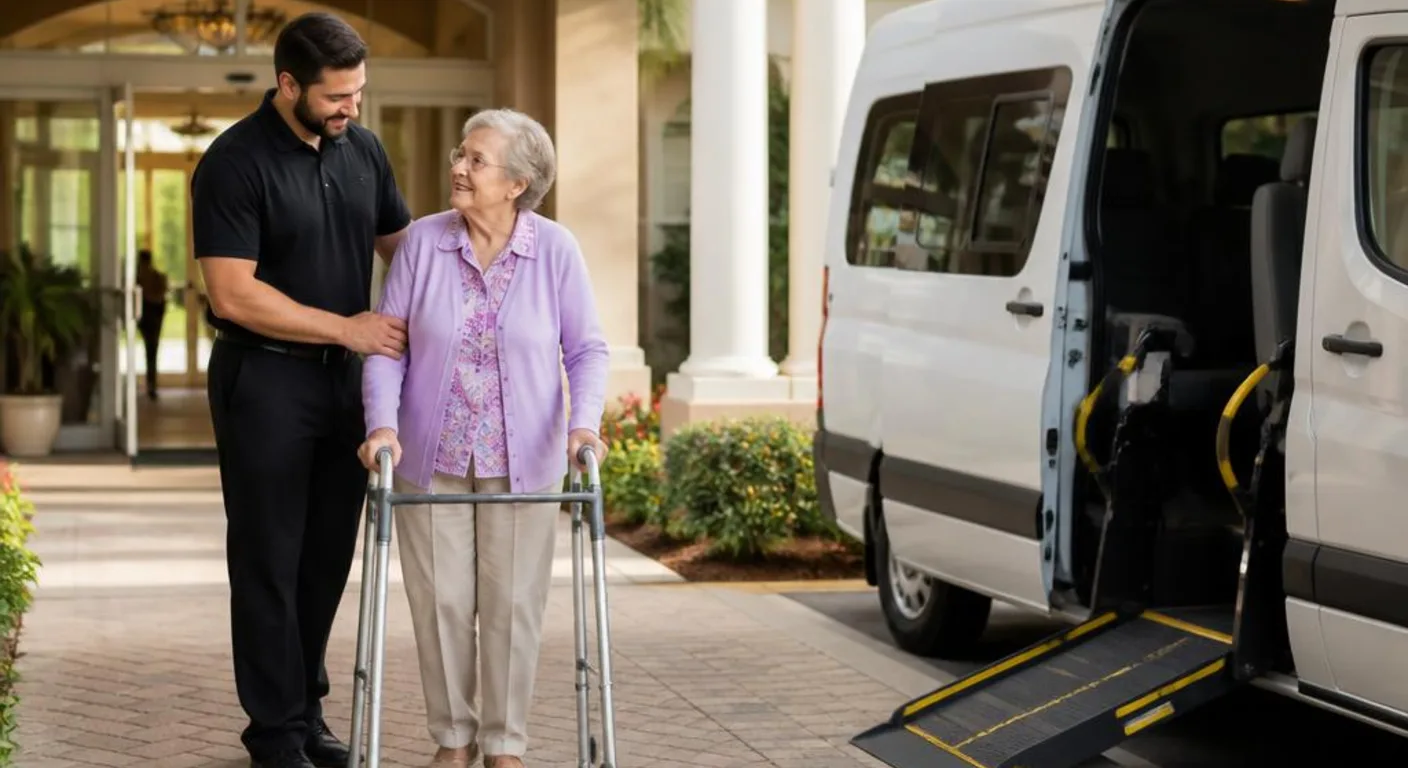
Assisted living, nursing home and skilled facility transfers require a shared handoff plan. The sending facility, receiving facility, family and transportation provider should confirm the passenger's mobility, equipment, pickup window, destination entrance and who accepts the passenger on arrival.
What makes a facility transfer different from an appointment ride?
A facility transfer has two care locations and two teams that need the same information. The transportation provider needs more than an address: the passenger must be ready, the vehicle must fit and the receiving team must know when and where the handoff will occur.
What should the sending facility prepare?
- Current mobility and transfer information.
- The passenger's wheelchair, walker, stretcher or other equipment.
- Pickup entrance, parking instructions and a staff contact.
- Expected ready time and any known delay.
- Documents or belongings that must travel with the passenger.
What should the receiving facility confirm?
- The destination entrance and best place for the vehicle to stop.
- Who will meet and accept the passenger.
- Whether the receiving room, bed or equipment is ready.
- A phone number for changes or arrival questions.
- Any access, elevator or escort instructions.
How should the family help coordinate?
A family member can make sure both facilities have the same transportation details and can tell the provider about changes that may not be reflected in an older care plan. Ask the facilities who owns each handoff so no one assumes another person is calling.
How do you choose the vehicle?
- Ask the sending team how the passenger moves today.
- Tell the provider whether the passenger transfers or remains in a mobility device.
- Share equipment, positioning and destination-access details.
- Have the provider confirm the ride type and handoff plan with both facilities.