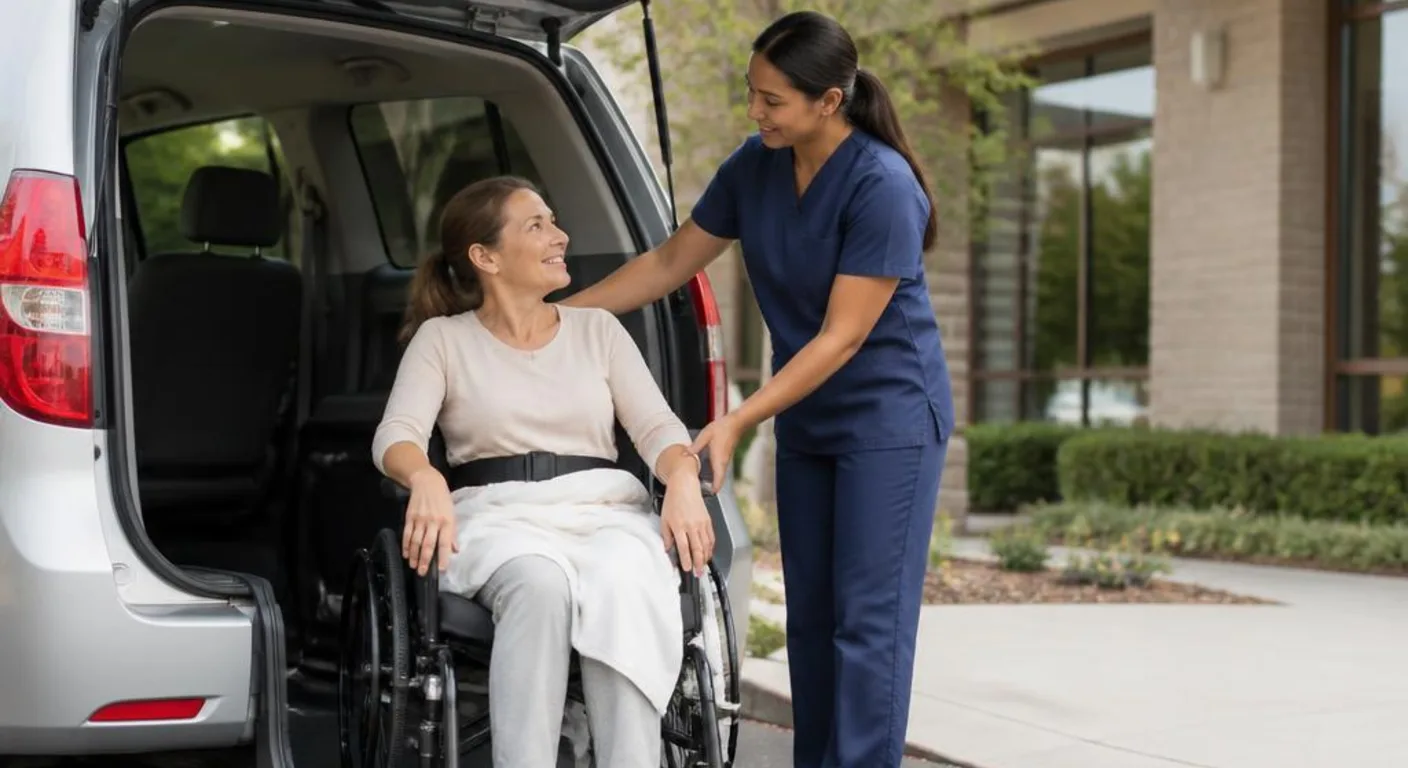
A private-pay NEMT ride home after surgery can be appropriate when the care team has cleared the passenger for scheduled non-emergency transportation and the vehicle matches the recovery needs. Plan the position, transfer, equipment, caregiver handoff and facility timing before discharge day.
What should the care team confirm?
- Whether the passenger can travel in a seated vehicle or needs a stretcher.
- Whether the passenger can transfer and bear weight.
- Any positioning, movement or equipment restrictions.
- Whether a caregiver must accompany or receive the passenger.
- What symptoms or changes require clinical attention instead of transportation.
What should you tell the transportation provider?
The diagnosis alone does not tell the provider what vehicle fits. Describe what the passenger can do now, where the vehicle can park, how the passenger will reach the entrance and who will be present at the destination.
- Procedure or discharge location and entrance.
- Passenger mobility and transfer status.
- Wheelchair, walker, oxygen or other equipment.
- Stairs, elevator, driveway or doorway limitations.
- Home caregiver name and phone number.
How should you coordinate a changing discharge time?
- Give the provider the expected ready time and the facility contact.
- Ask who should call if paperwork, medication or recovery takes longer.
- Keep the caregiver available for the updated pickup window.
- Confirm the destination handoff before the passenger leaves the facility.
What is the difference between planned NEMT and emergency response?
Scheduled NEMT is arranged for a known, non-emergency trip. Medicare describes ambulance coverage around medically necessary ambulance transportation, and 911.gov directs people to call 911 when an emergency requires immediate help. If the passenger has a sudden serious change, follow emergency instructions rather than waiting for a scheduled ride.